Bluetooth Laser Mouse For Mac
Posted : admin On 27.08.2019Buy iHome Bluetooth 3.0 Mouse for Mac at Staples' low price, or read our customer reviews to learn. Logitech M510 910-004554 Wireless Laser Mouse, Red.
- Keyboard And Mouse For Imac
- Bluetooth Laser Mouse For Mac Pro
- Bluetooth Laser Mouse For Mac Windows 10
Keyboard And Mouse For Imac
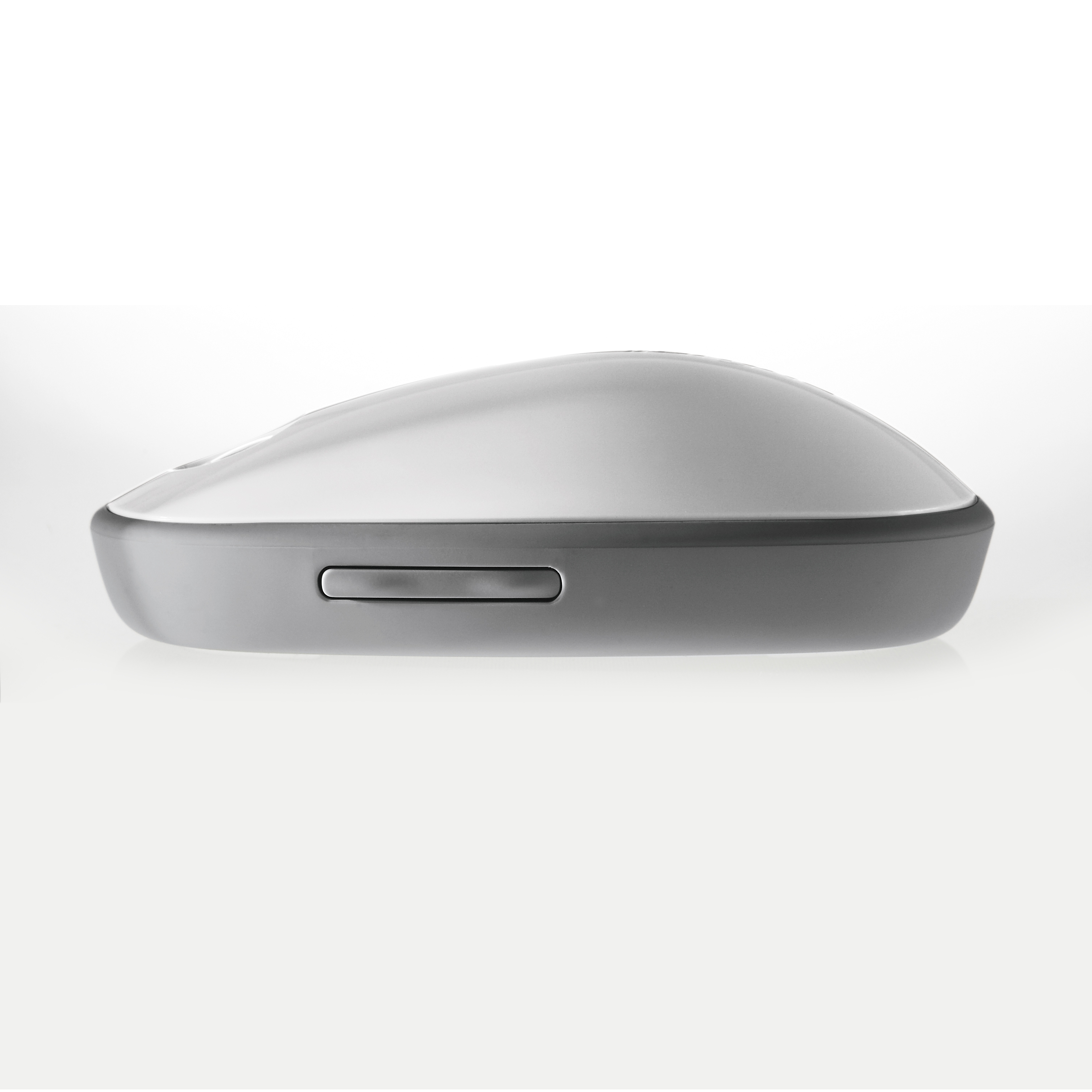
MacBook users (and desktop Mac users as well) are often as enamored of their hardware's look as its performance, so a healthy side industry has popped up for accessories that share Apple's basic design cues. Accessory maker Targus has a new line of Mac-flavored devices, including this one, called simply the Bluetooth Laser Mouse for Mac. This $69 mouse has a white body on a gray base, and even though the latest MacBooks are all aluminum, white is still the universal Mac color in many minds.
There are large left and right mouse buttons, plus two small programmable thumb buttons on the left side of the base. The mouse is powered by two AA batteries, and since it's a Bluetooth device, it doesn't require a USB dongle. At 4.6 inches by 2.5 inches by 1.5 inches (at its highest point), it's a bit big for travel, although the body design, which curves up in the middle and tapers at either end, is comfortable even for long stretches. The most striking aspect of the Targus Bluetooth Laser Mouse is the small dime-sized round optical sensor that sits between the two mouse buttons in place of a traditional scroll wheel. Targus calls the concept 'four-way touch scroll,' and its functionality is similar to that of a trackball.
The scroll zone is very sensitive, which makes scrolling up and down long Web pages a snap, but makes precision scrolling nearly impossible.
For many if not most laptop users, including myself, a mouse is much easier to use than a trackpad in the majority of situations. It's quicker, easier, more efficient, and comfortable. No matter how good the trackpad technology, one can never get the same full sense of control as one gets with a pointing device, making the trackpad experience extremely frustrating at times.
Finding the best mouse for a MacBook Pro, or a MacBook Air is not straightforward. It is not just a simple matter of buying one that is technically compatible, most people also want something that will fit with the look and feel of their Apple laptop too. A computer mouse can vary in numerous ways too, such as:. Size. Feel.
Number and arrangement of buttons. Style of scrolling wheel. General design. Price and value for money. Wired or wireless. Color and appearance. If you want a product that incorporates the very latest in innovative touch-sensitive technology from Apple and fits perfectly with the look and feel of your MacBook Pro, or Air, then you will be wanting the Apple Magic Mouse.
Bluetooth Laser Mouse For Mac Pro
Yes, the price tag is a little bigger, but in terms of design, it is head and shoulders above anything else out there that is currently available. As well as using Bluetooth to operate without tying up a USB port, this premium Apple product also incorporates laser technology, which means that it performs at 20 times the levels of ordinary optical tracking. The magic mouse also has mini-sensors, which enable it to detect even the tiniest of movements. The top-shell design means that the mouse fits perfectly with other Apple designed technology. It also incorporates Bluetooth technology and touch-sensitive technology. A Brief History of the MacBook Brand The original 15 inch MacBook Pro was announced on January 10, 2006 by Steve Jobs at the Macworld Conference & Expo.
Later that year on May 16 came the MacBook MacBook, which was available in black or white colors. Both notebooks later switched to an unibody design. The MacBook Air first appeared with a 13.3 inch screen in 2008, promoted as the 'world's thinnest notebook' when Steve Jobs announced its release. The original MacBook MacBook line was discontinued in 2011 but relaunched in 20. It is difficult for a modern computer user to imagine a world without the mouse, such is the ubiquitous and usefulness of this device. The first mouse was invented by Douglas Engelbart in 1964. It had a wooden shell, circuit board.
Plus a couple of two metal wheels that rolled around on the surface that the mouse was placed upon. In 1972 Bill English came up with the design known as the 'Ball Mouse'.
He replaced Engelbart's wheels with a ball. The ball could detect movement in any direction thanks to interaction with two rollers that in turn spun wheels. The motion could be converted into electrical pulses signifying direction and speed.
The ball mouse was such an iconic design, that it dominated the market for many years. The optical mouse was developed in around 1980.
The advantage of an optical was that it solved an issue with the ball mouse, where the ball would pick up dirt, grease, and fluff and gradually lose functionality over time (although they could be cleaned, of course - never a particularly pleasant task!). Optical mice were expensive to make, however, and it wasn't until the late 90s that prices had dropped enough for them to come into general use. Nowadays, the optical mouse is the standard type sold. For those who prefer a wired mouse, there are many advantages with purchasing the Apple Optical, which is precise and relatively inexpensive. The fluid elliptical shape of this mouse feels very comfortable and natural, plus its glass-smooth surface projects elegance.
Rather than having a separate, specific button, the entire mouse effectively operates as one, with the body pivoting to click. The beautiful design of this Apple product means that there are no mice balls to clean and no rollers to wear out or get dirty. For more information on managing or withdrawing consents and how we handle data, visit our Privacy Policy at: Show Details Necessary HubPages Device ID This is used to identify particular browsers or devices when the access the service, and is used for security reasons. Login This is necessary to sign in to the HubPages Service. Google Recaptcha This is used to prevent bots and spam. Akismet This is used to detect comment spam. HubPages Google Analytics This is used to provide data on traffic to our website, all personally identifyable data is anonymized.
HubPages Traffic Pixel This is used to collect data on traffic to articles and other pages on our site. Unless you are signed in to a HubPages account, all personally identifiable information is anonymized. Amazon Web Services This is a cloud services platform that we used to host our service. Cloudflare This is a cloud CDN service that we use to efficiently deliver files required for our service to operate such as javascript, cascading style sheets, images, and videos. Google Hosted Libraries Javascript software libraries such as jQuery are loaded at endpoints on the googleapis.com or gstatic.com domains, for performance and efficiency reasons. Features Google Custom Search This is feature allows you to search the site.
Bluetooth Laser Mouse For Mac Windows 10
Google Maps Some articles have Google Maps embedded in them. Google Charts This is used to display charts and graphs on articles and the author center. Google AdSense Host API This service allows you to sign up for or associate a Google AdSense account with HubPages, so that you can earn money from ads on your articles. No data is shared unless you engage with this feature.
Google YouTube Some articles have YouTube videos embedded in them. Vimeo Some articles have Vimeo videos embedded in them. Paypal This is used for a registered author who enrolls in the HubPages Earnings program and requests to be paid via PayPal. No data is shared with Paypal unless you engage with this feature. Facebook Login You can use this to streamline signing up for, or signing in to your Hubpages account. No data is shared with Facebook unless you engage with this feature.
Maven This supports the Maven widget and search functionality. Marketing Google AdSense This is an ad network.
Google DoubleClick Google provides ad serving technology and runs an ad network. Index Exchange This is an ad network. Sovrn This is an ad network. Facebook Ads This is an ad network. Amazon Unified Ad Marketplace This is an ad network. AppNexus This is an ad network.
Openx This is an ad network. Rubicon Project This is an ad network. TripleLift This is an ad network. Say Media We partner with Say Media to deliver ad campaigns on our sites. Remarketing Pixels We may use remarketing pixels from advertising networks such as Google AdWords, Bing Ads, and Facebook in order to advertise the HubPages Service to people that have visited our sites.
Conversion Tracking Pixels We may use conversion tracking pixels from advertising networks such as Google AdWords, Bing Ads, and Facebook in order to identify when an advertisement has successfully resulted in the desired action, such as signing up for the HubPages Service or publishing an article on the HubPages Service. Statistics Author Google Analytics This is used to provide traffic data and reports to the authors of articles on the HubPages Service.
Comscore ComScore is a media measurement and analytics company providing marketing data and analytics to enterprises, media and advertising agencies, and publishers. Non-consent will result in ComScore only processing obfuscated personal data. Amazon Tracking Pixel Some articles display amazon products as part of the Amazon Affiliate program, this pixel provides traffic statistics for those products.